For quite a long time, I could not decide whether my project was really about copyright or transparency.
In one tutorial, my tutor asked me directly:
Is your focus copyright, or transparency?
I did not have a convincing answer.
At that stage, I was still looking at originality, authorship and copyright in AI-assisted creative work. I was interested in a contradiction I kept seeing: people often defend originality in principle, but in actual creative practice, reference, imitation, appropriation and adaptation are much harder to separate.
The more I looked at these cases, the less useful it felt to keep asking whether something was simply original or copied.
A conversation with a friend who researches art history shifted the discussion. We talked about how borrowing, imitation and reinterpretation have always been part of art history. AI did not invent these behaviours. What has changed is the speed, scale and opacity of the process.
After that conversation, I became less interested in borrowing as a problem by itself.
I started paying more attention to what cannot be seen in the final work: where an image comes from, how far it has been transformed, which decisions were made by the creator, and which parts were produced through AI.
I also kept thinking about Donald Rodney’s Autoicon, which I saw at the New Museum. The work functions at once as a portrait of the artist, a digital archive, and an early experiment with artificial intelligence. What interested me was not only the technology, but the way identity was reconstructed through stored materials, records and digital systems.
It made me think about AI-assisted creative work in a similar way. A finished image rarely shows the full structure behind it. References, rejected versions, edits and human decisions disappear, even though they help define how the work came into being.
This gave me another way to think about transparency: not as showing everything, but as deciding which traces of a creative process are necessary to understand the work and the person behind it.
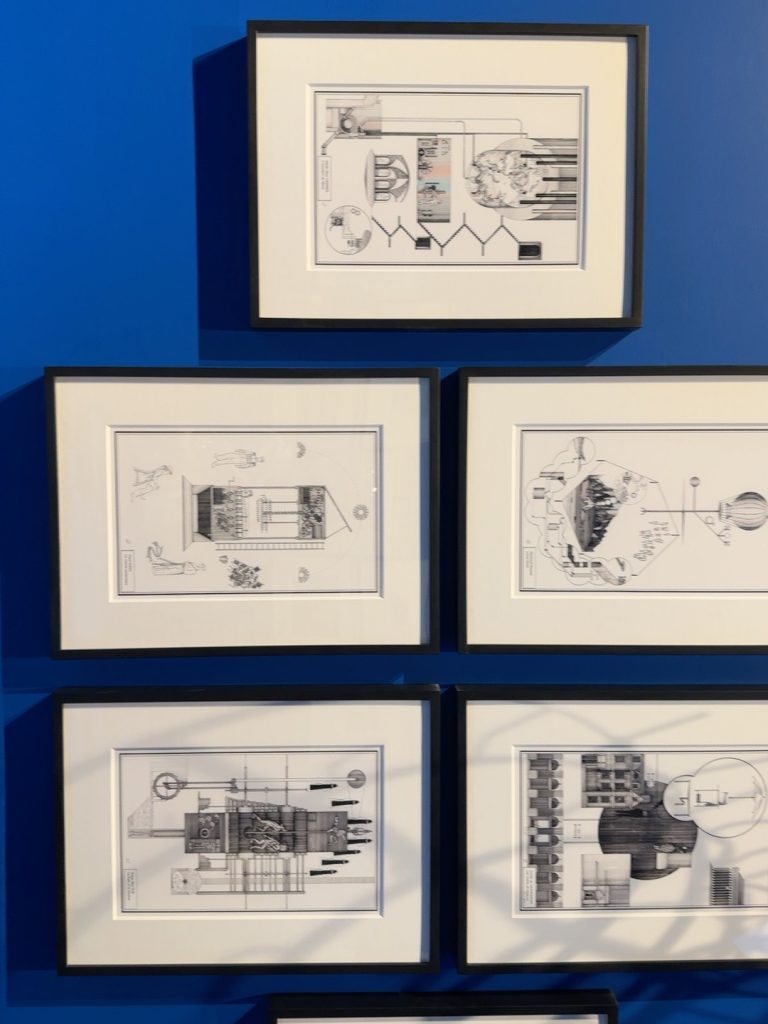
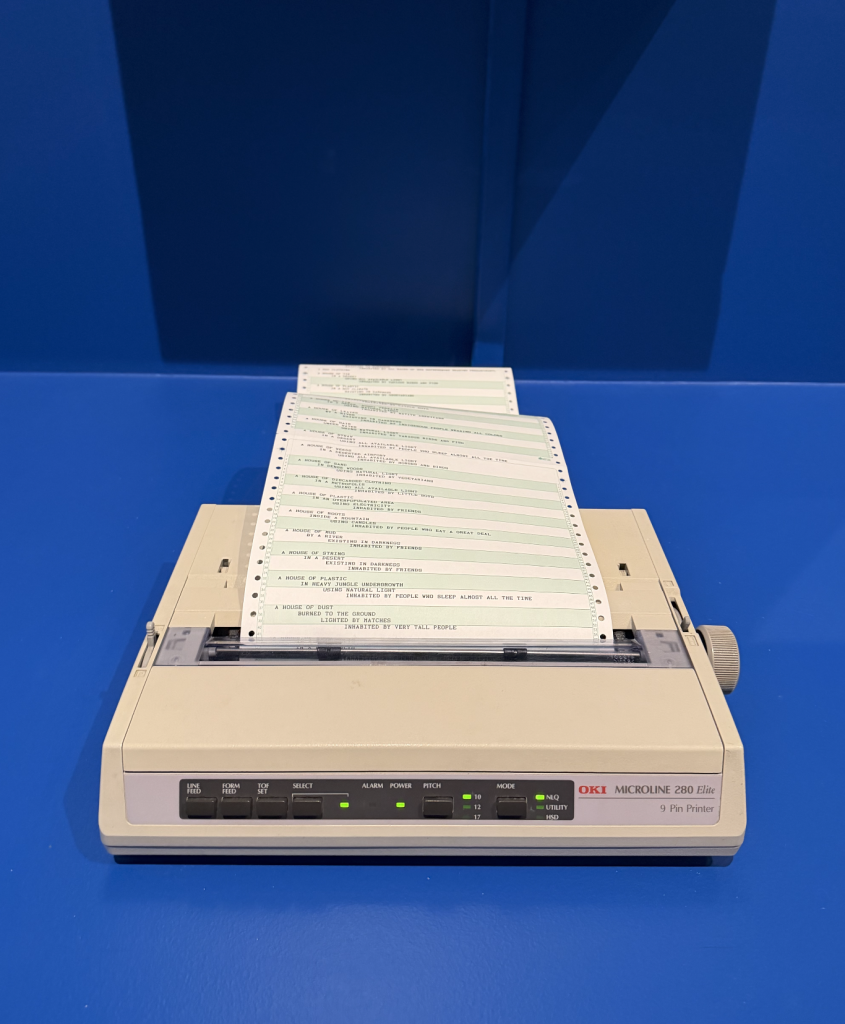
This is where the word meaningful became more useful to me.
My question is now:
How can meaningful transparency be defined in AI-assisted creative practice?
At the moment, I am less interested in showing everything than in deciding what is actually worth showing, and for whom.