In late June, I began a series of small-scale visual experiments, wanting to understand if the act of making itself could help me think about my research questions in different ways.
At this stage, I am no longer focused on creating a perfect image result, but rather view each visual experiment as a way to observe my own creative decisions. Using AI to generate images allows me to quickly test composition, atmosphere, and visual relationships, and also makes me more aware of how each image is shaped through a series of references, prompts, and iterations.
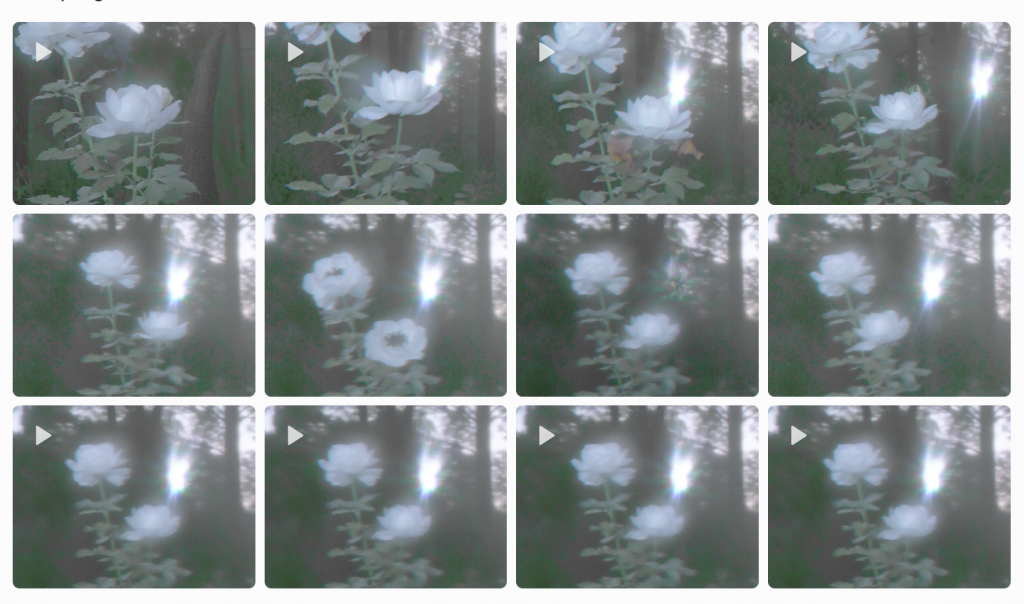
As I continue with the experiments, I find that the same visual elements repeatedly appear in my work: bubbles, flowers, water, reflections, light, and fragments of dreams. I had not planned these themes in advance. Instead, they seem to emerge naturally across different experiments. They all share a common characteristic—they are transient, fragile, and difficult to preserve. They exist for a moment and then disappear or transform into something else.
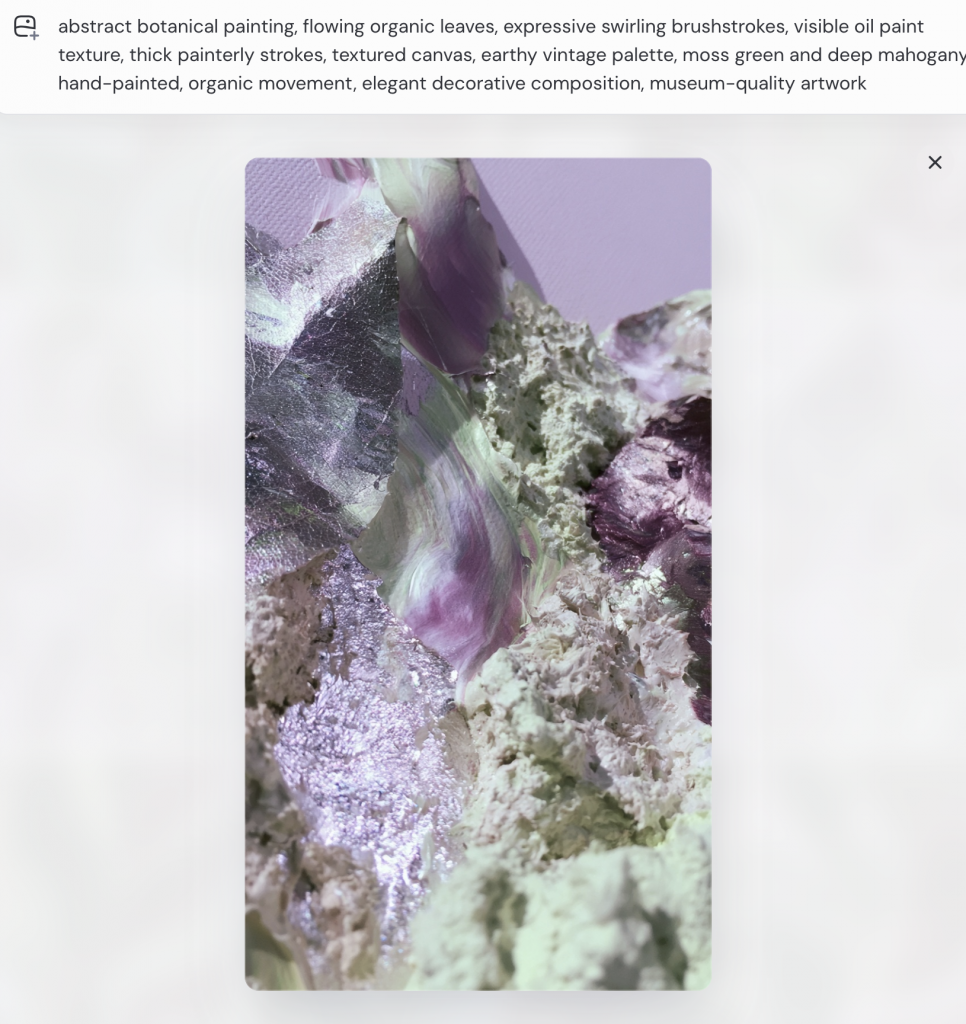
These images no longer simply represent specific narratives but serve as a visual language through which I can contemplate memory, originality, and the intangible processes behind image-making. They also reflect some of the uncertainties present in AI-generated images: we often experience the final image without seeing the many decisions, references, and transformations that led to it.
This experience also changed my understanding of practice-oriented research. Candy and Edmonds (2018) argue that knowledge can be produced through creative practice, not just conveyed by it. This idea resonates strongly with my own process. Tim Ingold (2013) also proposed a similar view, suggesting that making is not about executing a completed idea but a process of thinking through materials. To me, AI should not be understood merely as a tool for generating images but as a material that invites, introduces uncertainty, and requires continuous decision-making.
I plan to continue expanding these visual experiments while also beginning to explore dynamic imagery, animation, and simple coding. I hope to gradually develop a personal visual language that can express the hidden creative processes behind AI-generated images.
References
Candy, L. and Edmonds, E. (2018) ‘Practice-Based Research in the Creative Arts: Foundations and Futures’, Leonardo, 51(1), pp. 63–69.
Ingold, T. (2013) Making: Anthropology, Archaeology, Art and Architecture. London: Routledge.