
Continuing to Explore WATERMARK Through an Experimental Moving Image Project
Exploring how visual elements, creative choices and moving images can make human creative contributions more visible.
Every image has a visible surface.
But behind that surface are decisions we rarely see.
A direction chosen.
An alternative rejected.
A detail repeated.
A moment changed.
As AI becomes increasingly involved in moving image production, it can become harder to recognise the relationship between the final work and the people who shape it.
A traditional watermark is usually used to indicate ownership or attribution.
But what if a watermark could also reveal the creative decisions behind an image?
WATERMARK explores how moving images, visual traces and layered information might make human creative contributions more visible.
Building on my previous explorations, I want to take this idea a little further. Rather than simply showing how something was made, I am interested in helping people understand why it became what it is.
WHO MADE THIS?
WHAT MADE IT THIS WAY?
01 / BRINGING WATERMARK INTO A REAL CREATIVE PROJECT
Recently, I have been involved in the early planning stages of an experimental music video project called ORBIT.
Until now, most of my research has developed through interviews, interventions and visual experiments at university. But because I previously worked in commercial moving image production, I have always wondered whether WATERMARK could eventually be used in a real production.
I have wanted to bring my university research into an actual music video or commercial project for some time, just to see what might happen.
So, during the planning of ORBIT, I shared my WATERMARK concept with the creative team. With their agreement, I also tried bringing the idea into our visual discussions.
I explained my original idea to the team: using a moving visual mark that could give viewers a way to see some of the creative information behind the final image.
I wasn’t trying to turn ORBIT into my university project. I simply wanted to use this opportunity to see how WATERMARK might develop in a different creative environment.
At first, my idea was quite simple. I wanted the watermark to exist within the moving image itself, rather than appearing as a logo or label placed over the finished video.
But the discussion made me start thinking about WATERMARK from another perspective.
02 / LINES, CIRCLES AND FRAGMENTS
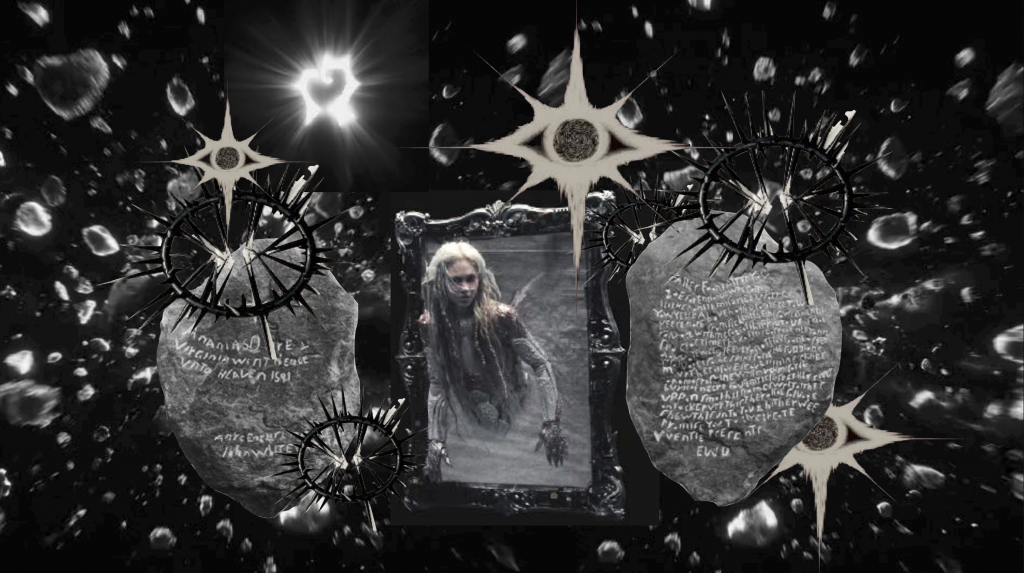
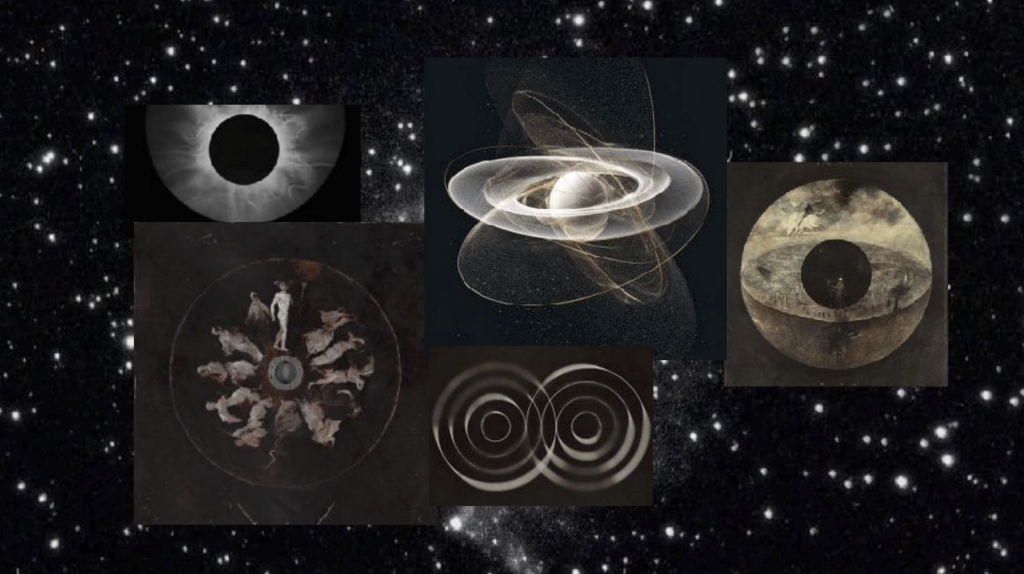
While developing ORBIT, we discussed several visual elements, including lines, circles, transparent layers and fragmented images.
These ideas were originally part of ORBIT’s visual direction, but they also made me think differently about WATERMARK.
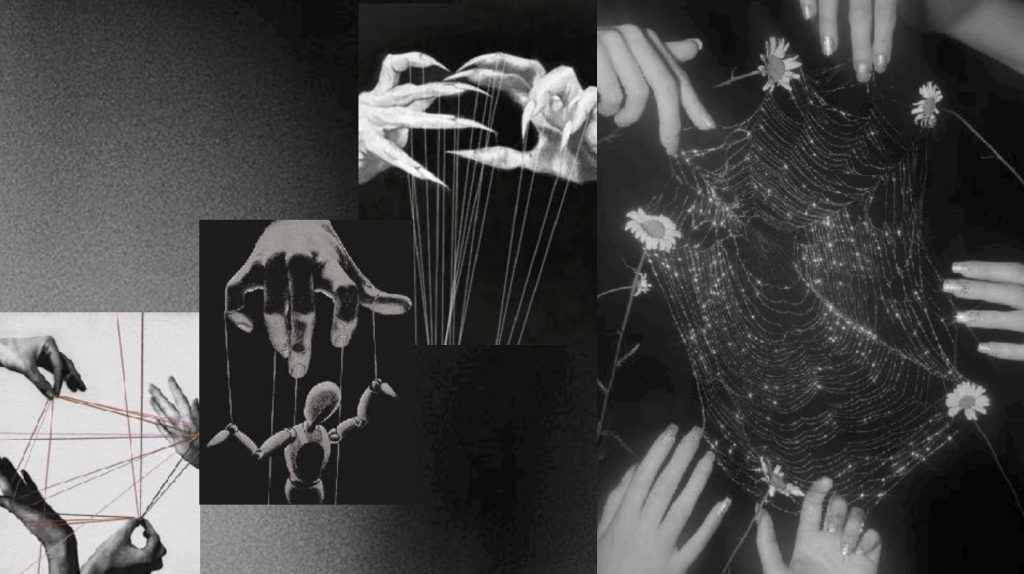
For example, could lines represent connections between different creative decisions, rather than simply being graphic elements?
Could circles and repeated movements suggest the way creators return to an idea, repeat something or make changes?
Could fragments represent the process of breaking down existing material, selecting parts of it and putting them together again?
I was particularly interested in the idea of transparent layers.
Transparency doesn’t just mean being able to see through something. It could also allow information from different stages of the creative process to exist within the same image.
This made me reconsider how WATERMARK might work visually.
Previously, I was more focused on using a watermark to reveal information behind the final work, such as who created it, how it was made and what people contributed.
But now I started wondering whether a watermark could become part of the moving image itself.
It wouldn’t necessarily need to explain everything. Perhaps it could leave certain traces of the creative process visible within the image.
These traces might not simply tell viewers what happened, but encourage them to think about why an image changed and which decisions shaped the final result.
I also began to realise that WATERMARK might not need one fixed visual system. It could take different forms depending on the project, while keeping the same purpose: making human creative contributions more visible.
03 / AN UNEXPECTED THOUGHT ABOUT REPAIR
Another word that stayed with me during the discussion was:
Repair.
Normally, when I think about repair, I imagine fixing something broken and bringing it back to its original state.
But this discussion made me think about it differently.
What if repair isn’t always about returning something to the way it was? What if it can also mean taking existing elements and reorganising them into a new structure?
For example, when separate or broken pieces are connected and rearranged, they may no longer look the same, but they can form a new relationship.
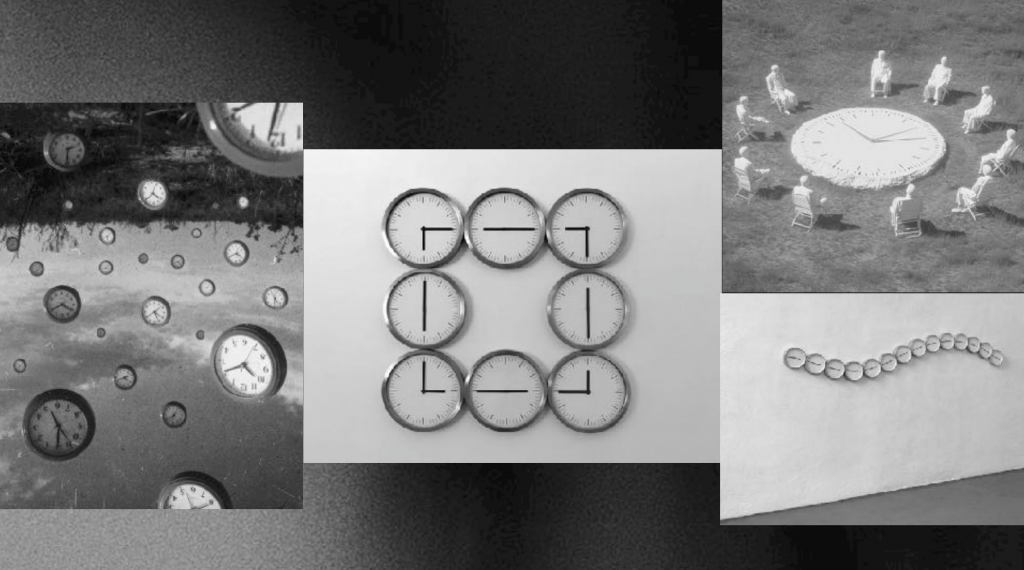
This made me think about AI-assisted creative work.
When using AI-generated content or working with existing footage, creators don’t always start with a completely blank canvas.
Sometimes, the creative work happens through selecting, changing, combining and reorganising what is already there.
And these decisions are not always easy to recognise in the final work.
Of course, this doesn’t mean that every modification is necessarily original or creatively valuable.
But it made me ask myself:
Could human creative contribution exist not only in creating something from scratch, but also in the decisions that change existing material?
At the beginning of my research, I was more concerned about whether AI might replace human creativity or make human contributions less visible.
I still think questions around authorship, copyright and the sources of creative work are important. But now I’m also becoming more interested in what people actually contribute when they work with AI, rather than only thinking about what AI might replace.
If a watermark simply tells us that AI was used, it may still tell us very little about the human contribution.
But if it could also show how people selected, changed or reconstructed something, perhaps it could offer another way to understand the creative process.
04 / LOOKING BACK AT MY THIRD INTERVENTION
This discussion also made me look back at my recent third visual experiment.
In that experiment, I invited creators to use Glitch Lab to explore existing visual material. They could choose an area they found interesting, then enlarge, repeat or adjust parts of the image to explore different visual possibilities.
What interested me wasn’t only the final image, but also the choices people made when working with material that already existed.
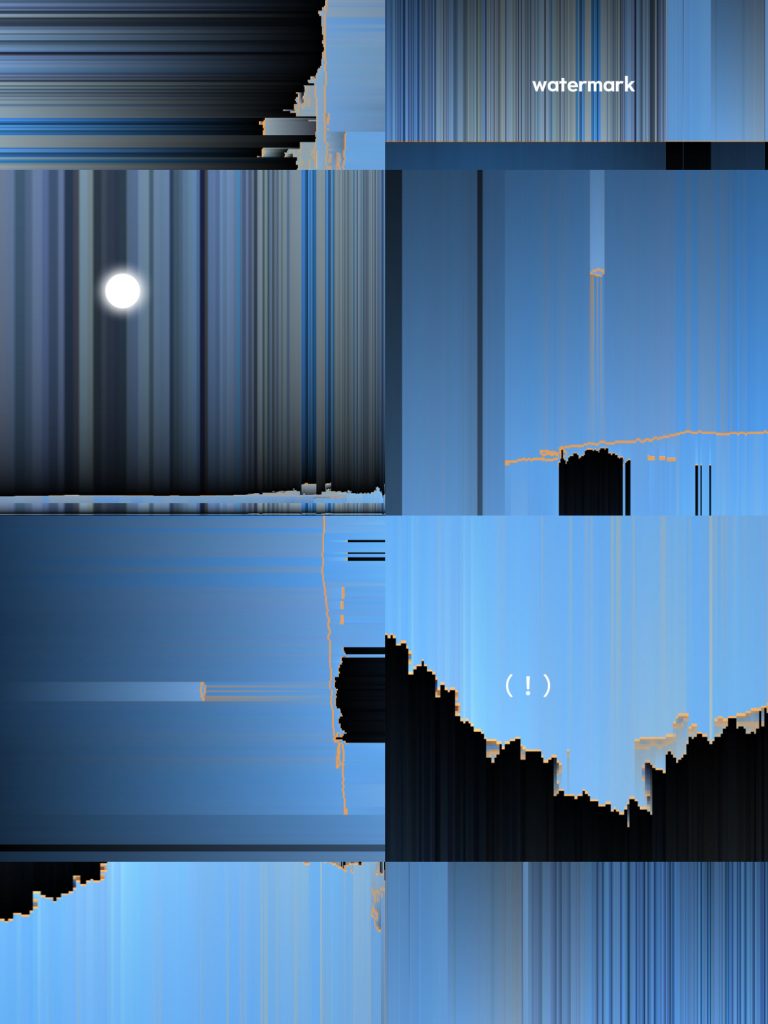
Looking back, I can see a connection between this experiment and our visual discussions for ORBIT. Both involved people making choices and changing existing visual material.
The difference was that my third intervention focused more on individual exploration, while ORBIT made me think about how similar ideas might work within a collaborative production.
It also made me wonder whether WATERMARK could use lines, circles, fragments and transparent layers to make some of these creative choices visible.
But seeing what someone did doesn’t necessarily mean understanding why they did it.
That’s still something I need to explore further.
05 / FINDING SOME THEORETICAL CONNECTIONS
After this discussion, I went back to some of my previous reading on creative practice and looked for a few more references.
One was Tim Ingold’s The Textility of Making (2010).
Ingold discusses making as a process that develops through the relationship between the maker and the materials, rather than simply following a plan that has already been decided.
This reminded me that, in creative work, ideas are not always fully formed at the beginning. They often develop through trying things out, making changes and responding to what happens.
The development of WATERMARK felt similar. I hadn’t planned to introduce lines, circles or fragments into the project. I began to see their connection to my research while discussing the visual ideas for ORBIT.
I also thought about Donald Schön’s idea of Reflection-in-Action in The Reflective Practitioner (1983), which looks at how practitioners reflect and adjust their thinking while working.
My understanding of WATERMARK has been changing in a similar way. I started by thinking about how to show that human contributions exist, but now I’m also questioning which creative decisions are worth showing.
Rosa Menkman’s The Glitch Moment(um) (2011) gave me another way to think about digital glitches and fragmented images.
Connecting this with my Glitch Lab experiment, I began to wonder whether visual fragmentation, repetition and reconstruction could communicate how a creator works with existing material, rather than just being used as a visual style.
These theories don’t prove that WATERMARK will work in the way I imagine. But they helped me make sense of some of the connections between the creative discussion and my visual experiments.
06 / WHAT I LEARNED FROM THIS EXPERIENCE
I started thinking about WATERMARK again within the context of real moving image production.
Making creative contributions visible may not always require extra written explanations. It might also be explored through the structure, changes and visual relationships within the moving image itself.
For me, the most important thing I gained from this experience wasn’t a new visual style. It was beginning to connect my research with my actual creative practice.