
Research Context
Today, immersive digital environments are widely used in exhibitions, commercial installations, and public spaces.
However, many of these environments focus mainly on spectacle, novelty, or entertainment.
For example, interactive screens in public spaces invite people to play, but these interactions are often short and surface-level.
This raises an important question for my research:
Can immersive environments create a genuine emotional connection rather than just visual stimulation?
Case
During my research I looked at interactive artworks that connect digital environments with emotional experience.
One example is a healing interactive installation permanently displayed in a public hospital in West London.
The work responds to body movement and visualises water-like patterns to create a calming atmosphere.
Another example is Wishing Wall by Varvara and Mar.
Visitors speak their wishes and the system transforms them into digital butterflies, allowing emotions to become visible in a shared space.
These examples suggest that digital environments can translate emotional states into spatial experiences.
Prototype
Inspired by these examples, I created a small prototype experiment.
This box is a miniature immersive environment.
Inside the box, I used natural imagery, projection, and simple interaction to create an emotional ecosystem.
Hand movement inside the space triggers visual changes.When it is presented in a multi-faceted space, the feeling is very different from that of a flat computer,
The goal of this prototype is not to build a finished installation, but to test how spatial interaction might influence emotional atmosphere.
Findings
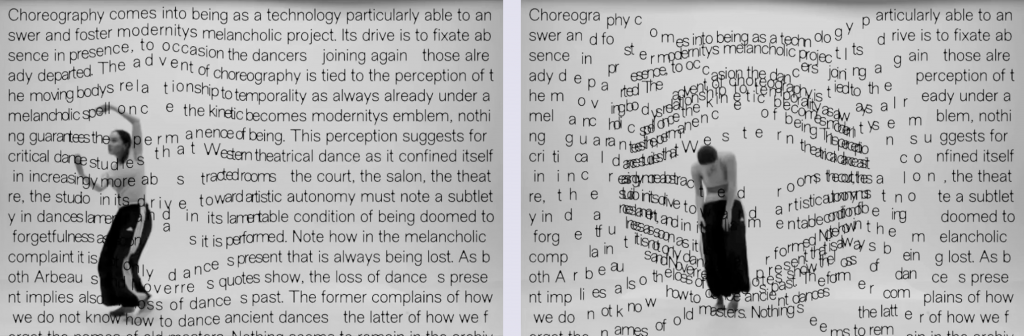
Through this experiment, I realised that many immersive environments today focus on visual stimulation rather than emotional connection.
Small interactions can change the atmosphere of a space, but emotional experience requires something deeper than simple visual effects.
Research in embodied interaction suggests that body movement and spatial presence may play an important role in shaping emotional environments.
Stakeholders
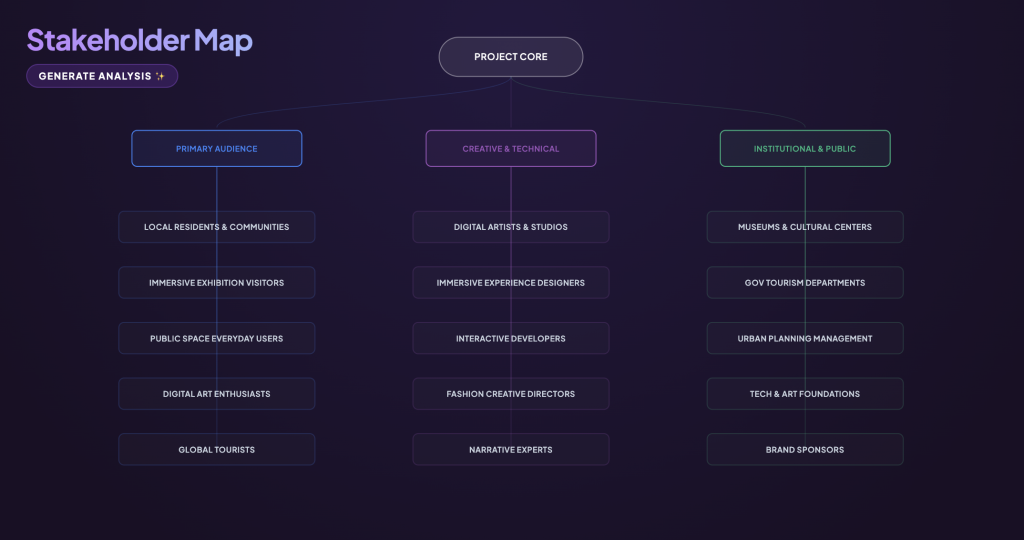
The stakeholders of this research include urban audiences who experience digital environments in everyday public spaces, as well as creative practitioners who design interactive environments.
Understanding how people emotionally respond to these spaces could also inform future applications, including cultural exhibitions, public installations, and potential commercial collaborations with brands.
Future Vision
The long-term direction of this research is to explore what I call an emotional utopia.
Instead of designing environments purely for entertainment, the goal is to create spaces that can sense and express emotional states.
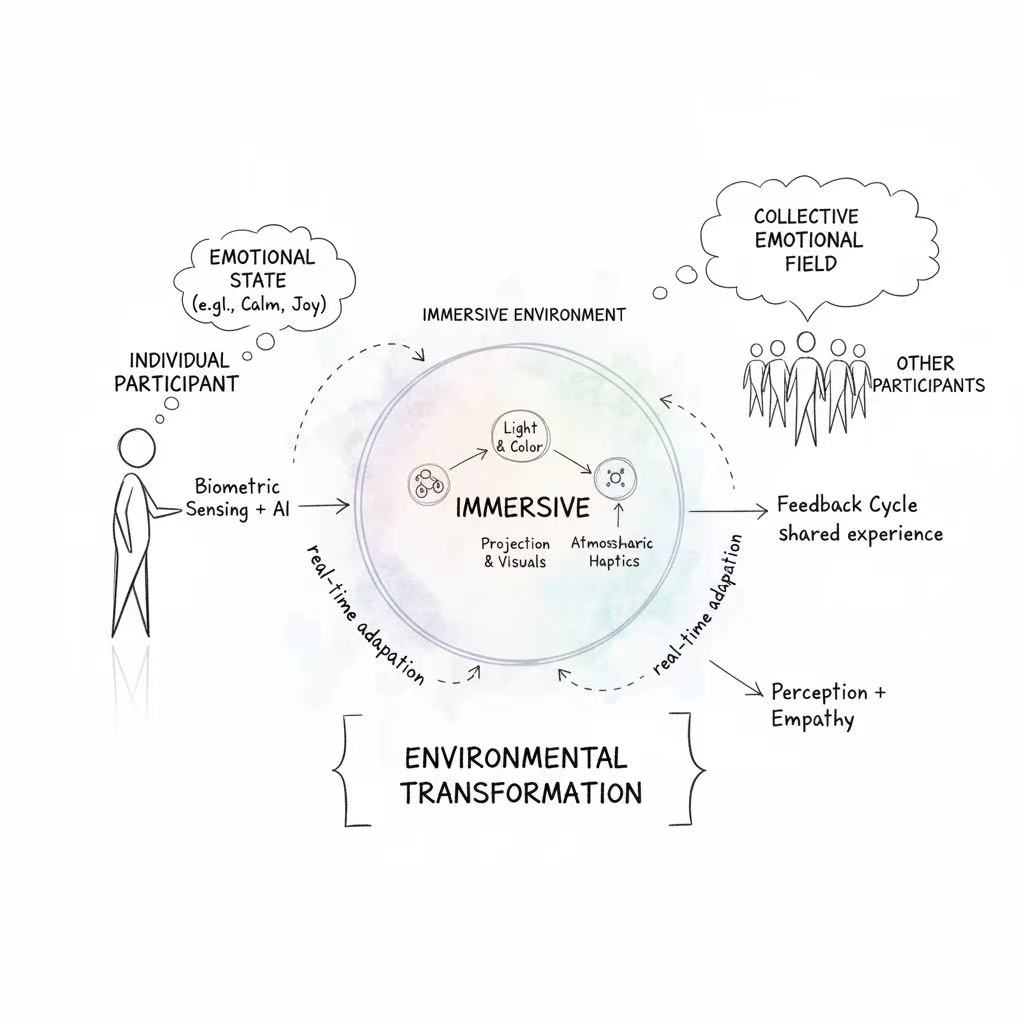
In such environments, people entering the space could influence the atmosphere through their emotions, allowing others to perceive and share that emotional experience.
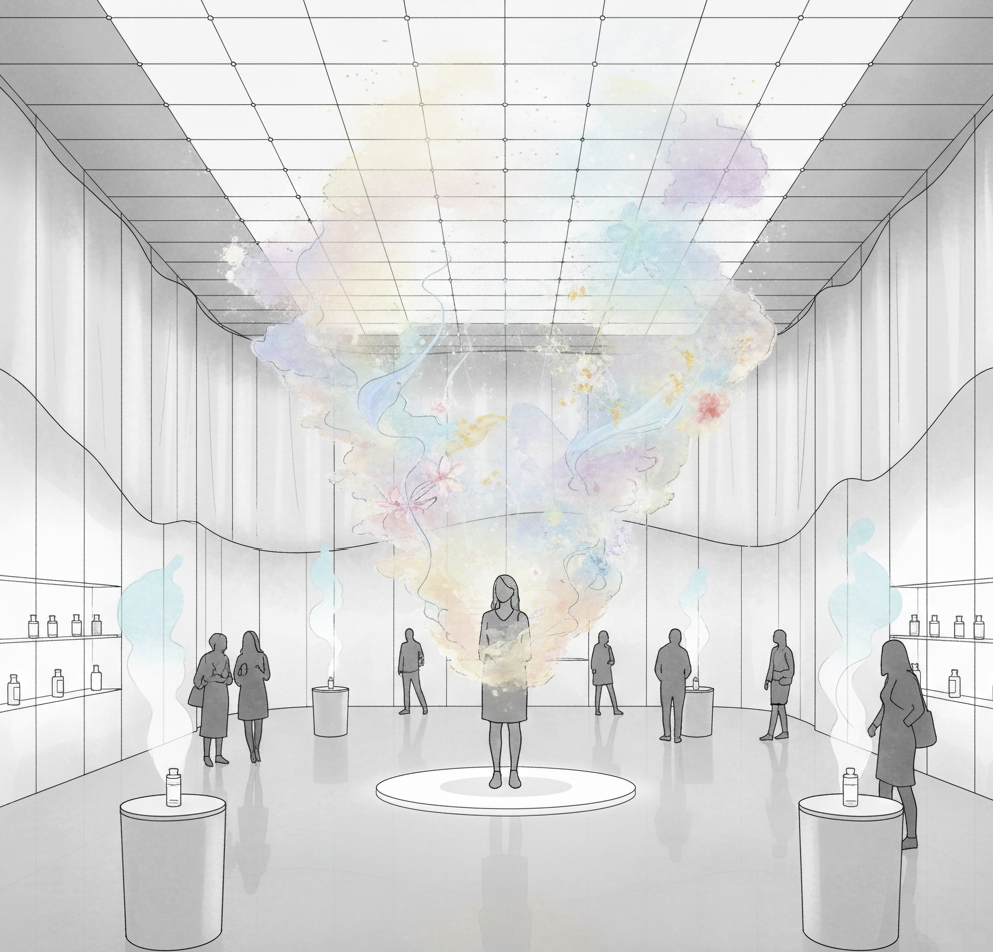
A speculative emotional fragrance environment where people’s emotional states generate personalised scent and visual atmospheres.
In this way, immersive environments might become spaces not only for spectacle, but for emotional reflection and connection.